Managing payroll is one of the most important responsibilities for any business. Whether you own a small business, startup, accounting firm, or growing enterprise, paying employees accurately and on time is essential for maintaining compliance, employee satisfaction, and smooth business operations.
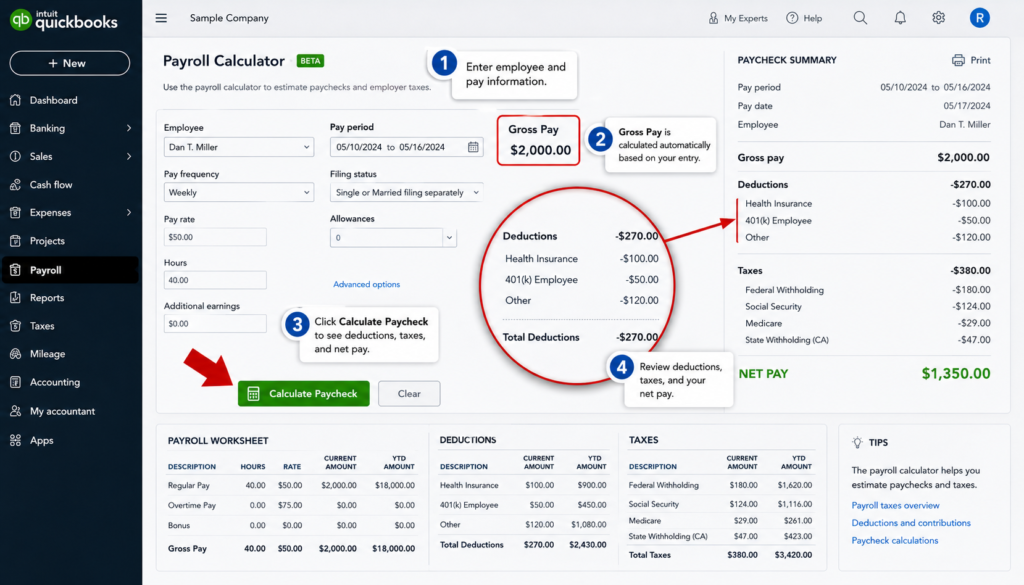
The QuickBooks Payroll Calculator simplifies payroll management by automatically calculating employee wages, payroll taxes, deductions, overtime pay, bonuses, and take-home pay. Instead of manually performing complex calculations, employers can use QuickBooks Payroll to ensure payroll accuracy while saving valuable time.
In this complete guide, you’ll learn how the QuickBooks Payroll Calculator works, how payroll taxes are calculated, common payroll mistakes to avoid, and why businesses across the United States rely on QuickBooks Payroll for payroll processing in 2026.
What Is the QuickBooks Payroll Calculator?
The QuickBooks Payroll Calculator is a payroll management tool designed to help businesses calculate employee paychecks accurately. It automatically estimates payroll taxes, deductions, overtime wages, bonuses, commissions, and net pay.
Instead of manually calculating payroll information, employers can enter employee details and allow QuickBooks Payroll to generate accurate paycheck calculations.
The calculator helps businesses determine:
- Gross employee earnings
- Federal income tax withholding
- State payroll taxes
- Social Security taxes
- Medicare taxes
- Employee deductions
- Overtime earnings
- Net take-home pay
Quick Answer
The QuickBooks Payroll Calculator helps employers accurately calculate employee paychecks by automatically estimating wages, taxes, deductions, overtime pay, and take-home salary while reducing payroll errors and improving tax compliance.
Why Payroll Accuracy Matters
Payroll accuracy directly affects employee satisfaction and business compliance. Even a small payroll error can create significant legal and financial challenges.
Problems Caused by Payroll Errors
| Payroll Issue | Potential Impact |
|---|---|
| Incorrect tax withholding | IRS penalties |
| Overtime calculation errors | Employee disputes |
| Missed payroll deadlines | Compliance violations |
| Incorrect deductions | Accounting discrepancies |
| Wrong employee classification | Legal issues |
| Late salary payments | Reduced employee trust |
Accurate payroll processing helps businesses avoid unnecessary penalties while maintaining strong employee relationships.
Key Features of QuickBooks Payroll Calculator
The QuickBooks Payroll Calculator includes several advanced payroll automation features.
| Feature | Benefit |
|---|---|
| Automatic Tax Calculation | Reduces manual errors |
| Direct Deposit | Faster employee payments |
| Overtime Calculation | Accurate overtime wages |
| Payroll Reporting | Better financial tracking |
| Tax Table Updates | Improved compliance |
| Employee Records Management | Simplified payroll administration |
| Bonus & Commission Tracking | Accurate compensation calculations |
These features make payroll management easier for businesses of all sizes.
Understanding Important Payroll Terms
Gross Pay
Gross pay is the total amount an employee earns before taxes and deductions are applied.
Examples include:
- Salary
- Hourly wages
- Bonuses
- Overtime earnings
- Commissions
Net Pay
Net pay is the final amount an employee receives after payroll taxes and deductions are subtracted.
Payroll Tax
Payroll taxes include mandatory federal, state, Social Security, and Medicare deductions withheld from employee wages.
Pre-Tax Deductions
Pre-tax deductions reduce taxable income before taxes are calculated.
Examples include:
- Health insurance
- Retirement contributions
- Flexible Spending Accounts (FSAs)
Post-Tax Deductions
Post-tax deductions occur after taxes are calculated.
Examples include:
- Wage garnishments
- Loan repayments
- Charitable donations
Gross Pay vs Net Pay
Many employers confuse gross pay and net pay.
| Payroll Component | Meaning |
|---|---|
| Gross Pay | Total earnings before deductions |
| Taxable Income | Income after pre-tax deductions |
| Payroll Taxes | Taxes withheld from wages |
| Net Pay | Final take-home salary |
Understanding this distinction is essential for accurate payroll calculations.
How Payroll Taxes Work
Payroll taxes are mandatory deductions withheld from employee wages to fund government programs such as Social Security and Medicare.
QuickBooks Payroll automatically estimates taxes using employee information and current tax tables.
Common Payroll Taxes
- Federal Income Tax
- State Income Tax
- Social Security Tax
- Medicare Tax
- Local Payroll Taxes (where applicable)
Accurate tax calculations help businesses remain compliant with federal and state regulations.
Step-by-Step Guide to Calculate Payroll Using QuickBooks Payroll Calculator
Step 1: Enter Employee Information
Input employee details including:
- Full name
- Address
- Social Security Number
- Tax filing status
- W-4 information
Step 2: Enter Employee Earnings
Add payroll information such as:
- Hourly wage or salary
- Hours worked
- Overtime hours
- Bonuses
- Commissions
Step 3: Calculate Gross Pay
Gross Pay = Regular Wages + Overtime + Bonuses + Commissions
Example:
| Component | Amount |
|---|---|
| Hourly Earnings | $1,000 |
| Overtime Pay | $150 |
| Bonus | $100 |
| Gross Pay | $1,250 |
Step 4: Apply Pre-Tax Deductions
Subtract:
- Health insurance premiums
- Retirement contributions
- Other pre-tax benefits
Step 5: Calculate Payroll Taxes
QuickBooks automatically estimates:
- Federal Income Tax
- Social Security Tax
- Medicare Tax
- State Payroll Taxes
Step 6: Calculate Net Pay
Net Pay = Gross Pay – Payroll Taxes – Other Deductions
The resulting amount becomes the employee’s paycheck.
Overtime Pay Calculation in QuickBooks Payroll
Most businesses pay overtime at 1.5 times the employee’s regular hourly rate.
Example:
| Component | Value |
|---|---|
| Hourly Rate | $20 |
| Overtime Hours | 5 |
| Overtime Rate | $30 |
| Total Overtime Pay | $150 |
QuickBooks Payroll automatically calculates overtime wages to help employers comply with labor laws.
Benefits of Using QuickBooks Payroll Calculator
1. Automated Payroll Processing
QuickBooks automates:
- Payroll calculations
- Tax withholding
- Employee deductions
- Payroll reporting
2. Improved Payroll Accuracy
Automation significantly reduces manual payroll mistakes.
3. Faster Payroll Processing
Businesses can process payroll in minutes rather than hours.
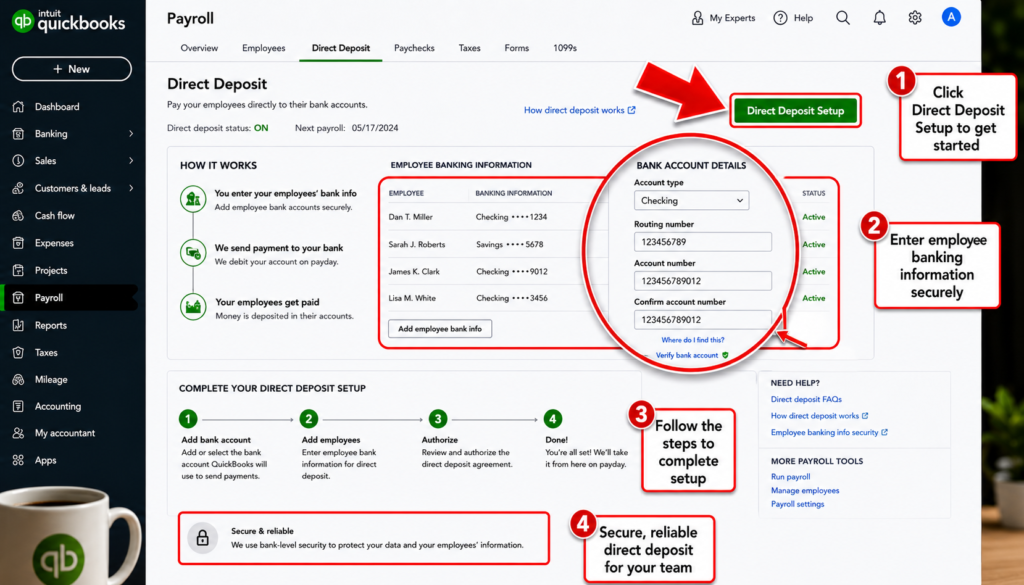
4. Direct Deposit Support
Employees receive payments directly into their bank accounts.
5. Payroll Tax Compliance
Automatic tax table updates help businesses remain compliant with changing regulations.
Why Businesses Choose TaxBookHelpline
TaxBookHelpline provides expert QuickBooks Payroll support for businesses across the United States.
Our certified QuickBooks specialists assist with:
- Payroll setup
- Payroll tax issues
- Direct deposit problems
- Payroll update errors
- Employee paycheck issues
- Payroll compliance concerns
Whether you use QuickBooks Desktop Payroll or QuickBooks Online Payroll, our experts can help ensure accurate payroll processing.
Conclusion
The QuickBooks Payroll Calculator is an essential tool for businesses seeking accurate payroll calculations, tax compliance, and efficient payroll management. By automating payroll processes, calculating taxes, and reducing manual errors, QuickBooks Payroll helps businesses save time while ensuring employees are paid accurately and on schedule.
Whether you’re a small business owner, accountant, or HR professional, using QuickBooks Payroll can simplify payroll management and improve overall business efficiency in 2026.
Need help with payroll setup, payroll tax calculations, or QuickBooks Payroll issues? Contact TaxBookHelpline for expert QuickBooks Payroll support today.
Frequently Asked Questions
Is the QuickBooks Payroll Calculator free to use?
The QuickBooks Payroll Calculator helps businesses estimate employee paychecks, payroll taxes, overtime wages, deductions, and net pay. Availability may depend on your QuickBooks Payroll subscription, but it significantly simplifies payroll management while improving payroll accuracy and compliance.
How does QuickBooks Payroll calculate payroll taxes?
QuickBooks Payroll automatically calculates federal income tax, Social Security tax, Medicare tax, and applicable state taxes using employee tax information, filing status, payroll tax tables, and current tax regulations.
What is included in gross pay?
Gross pay includes all employee earnings before taxes and deductions are applied. This may include hourly wages, salary payments, overtime earnings, commissions, bonuses, and other compensation received during a payroll period.
Why is payroll accuracy important?
Accurate payroll processing helps businesses avoid tax penalties, employee disputes, compliance violations, and accounting errors. It also ensures employees are paid correctly and on time, improving trust and workplace satisfaction.
Is QuickBooks Payroll suitable for small businesses?
Yes. QuickBooks Payroll is widely used by small businesses because it automates payroll calculations, tax deductions, direct deposits, payroll reporting, and compliance management, helping business owners save time and reduce payroll-related errors.

Alish Martin is an experienced finance and accounting content writer with 9+ years of expertise in QuickBooks troubleshooting, payroll management, bookkeeping solutions, and small business accounting software. Specializing in creating detailed and user-focused content, Alish helps businesses understand complex QuickBooks errors, technical issues, tax concerns, and financial processes through clear and practical guidance. As a contributor to Taxbookhelpline, Alish focuses on publishing accurate, SEO-optimized, and informative content designed to help users resolve QuickBooks challenges quickly and efficiently.